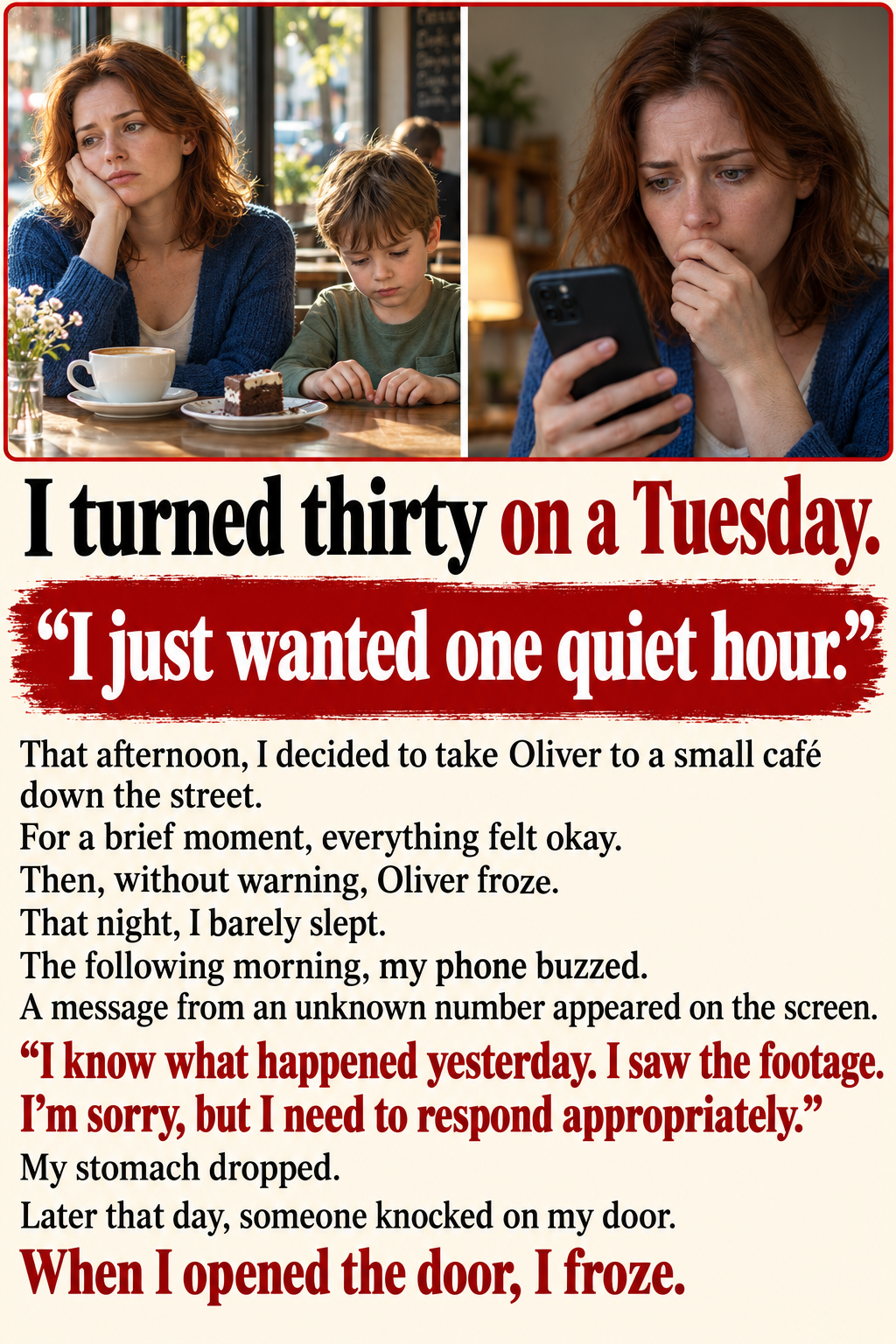
I turned thirty on a Tuesday.
There were no balloons, no birthday party, and no friends waiting to surprise me. At six that morning, I was standing in my kitchen, trying to convince my six-year-old son, Oliver, to put on his shoes.
He was crying because the texture of his socks felt wrong.
Oliver is severely autistic. He struggles to communicate his needs, dislikes unexpected physical contact, and finds even the smallest changes in his routine overwhelming. I had learned to recognize his distress long before he could explain it to me, but that didn’t make every difficult morning easier.
I was raising him alone. His father had left when Oliver was two, unable—or unwilling—to handle the challenges of our life together.
Since then, I had learned to manage everything myself. The appointments, the sleepless nights, the unexpected meltdowns, and the constant worry about whether I was doing enough for my son.
Most days, I felt as though I was holding our entire world together with trembling hands.
And on my thirtieth birthday, I was exhausted.
I didn’t want an expensive gift or a grand celebration. I didn’t even want a birthday cake with candles.
I just wanted one quiet hour.
One hour when I could sit somewhere, drink a cup of coffee, and feel like an ordinary woman instead of a mother constantly preparing for the next challenge.
That afternoon, I decided to take Oliver to a small café down the street.
I knew it was a risk. New places meant unfamiliar smells, strange noises, and unpredictable situations. Any of those things could overwhelm him.
Still, I wanted to try.
When we arrived, I chose a quiet table near the window. Oliver sat beside me, gently tapping his fingers against the tabletop while soft music played overhead.
For once, he seemed comfortable.
I ordered a small cake and a cup of coffee.
“Is it your birthday?” the waitress asked with a friendly smile.
I nodded.
“Yes. Mine.”
“Happy birthday!” she said warmly.
Her kindness caught me off guard. I smiled back, and for the first time in months, I felt my shoulders relax.
I watched Oliver hum softly to himself. Sunlight spilled through the window, and the café was filled with the gentle sounds of conversations and clinking cups.
I took a bite of cake.
For a brief moment, everything felt okay.
Then, without warning, Oliver froze.
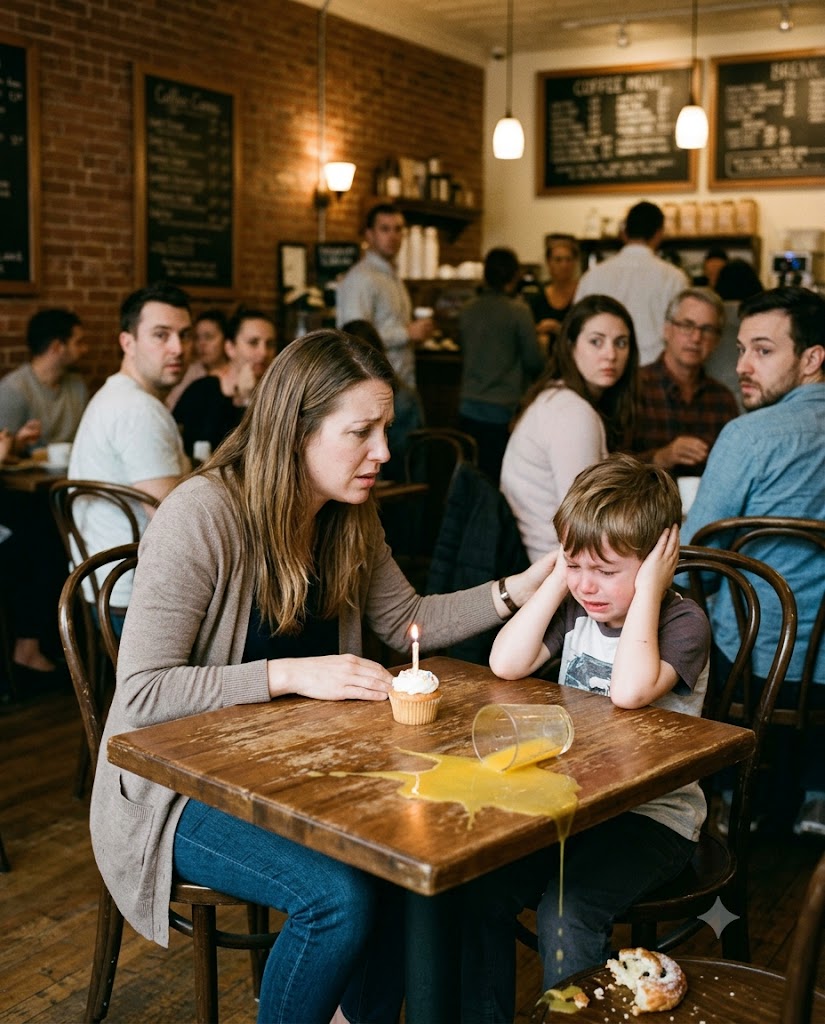
His body stiffened, and his expression changed. Before I could understand what was happening, he had an accident and wet the chair beneath him.
Everything seemed to stop.
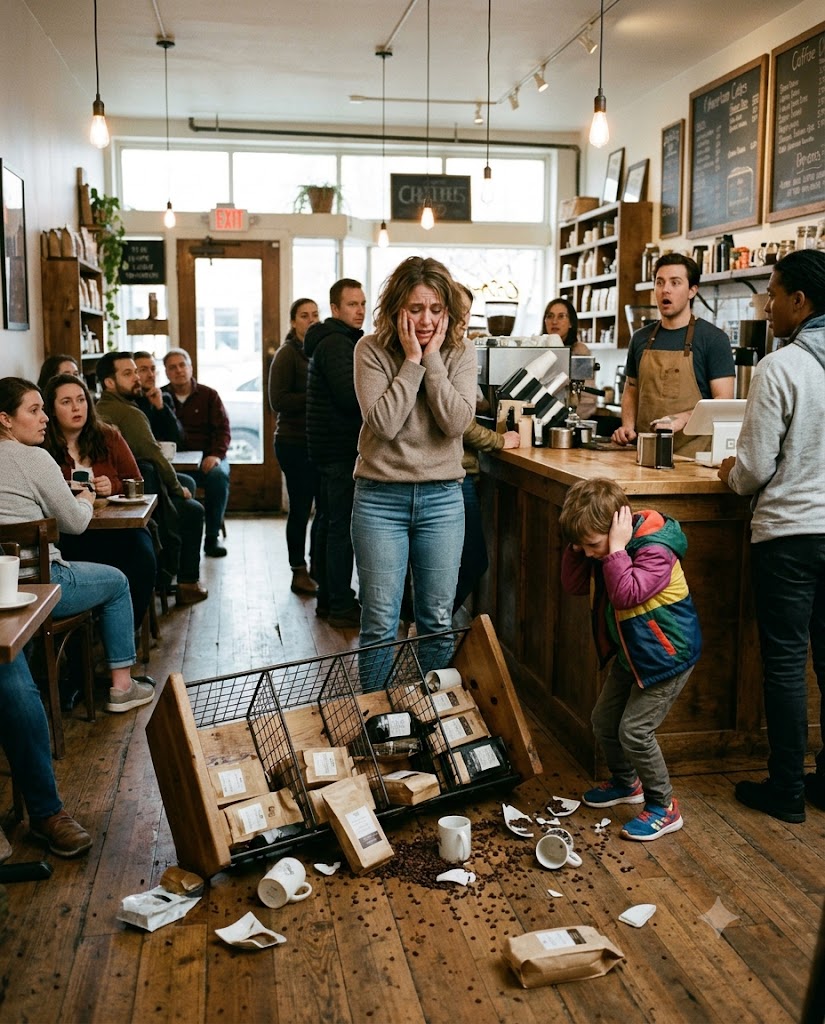
I stared at the dark stain, unable to move for a second. Then I noticed the people around us turning to look.
Conversations faded.
Some customers looked confused. Others stared with obvious discomfort. I heard a quiet gasp from a nearby table.
My face burned with embarrassment.
“I’m so sorry,” I whispered.
I grabbed our belongings and tried to help Oliver stand. But the sudden movement and attention frightened him. He began crying, overwhelmed by the noise and the tension around us.
“I’m sorry. I’m so, so sorry,” I repeated, barely able to get the words out.
The waitress approached, but I couldn’t bring myself to meet her eyes.
All I could think about was getting my son somewhere quiet.
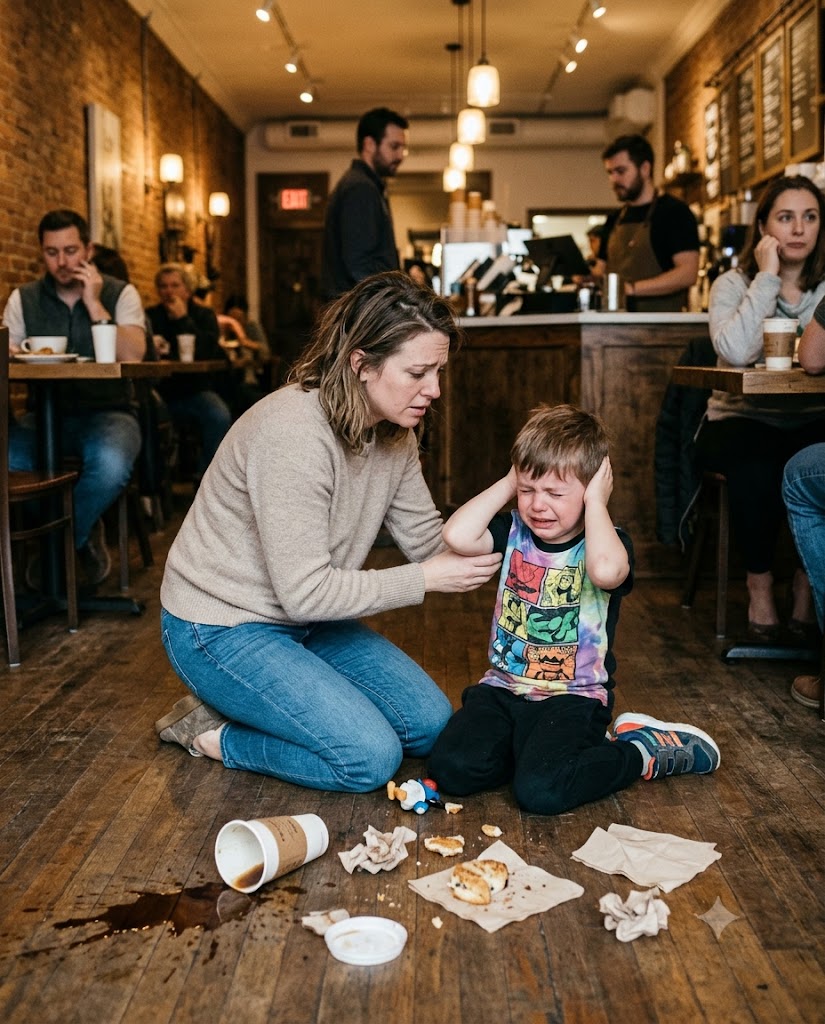
I hurried outside with Oliver and crouched beside him on the sidewalk. He was still crying, his breathing uneven as I tried to reassure him.
“It’s okay, sweetheart. You’re safe. Mommy’s here.”
I held his hand without forcing him to look at me. Slowly, I spoke in the calmest voice I could manage, hoping he would feel safe enough to settle down.
But inside, I was falling apart.
I felt ashamed, frightened, and painfully aware of how many people had witnessed what happened.
Then another realization struck me.
I hadn’t paid for the cake or coffee. The chair had been soiled, and I had rushed out without explaining anything.
I wanted to go back and apologize properly, but Oliver was still distressed. I couldn’t leave him standing outside while I tried to fix everything.
So I took him home, promising myself I would return as soon as I could.
That night, I barely slept.
I kept replaying the incident in my mind. I imagined the customers complaining, the café owner becoming angry, or someone sharing a recording of the incident online.
I worried that people would judge Oliver without understanding him. Worse, I worried they would judge me for being his mother.
The following morning, my phone buzzed.
A message from an unknown number appeared on the screen.
“I know what happened yesterday. I saw the footage. I’m sorry, but I need to respond appropriately.”
My stomach dropped.
I read the message several times, my mind racing through every possible consequence.
Would they demand money for the chair? Would they report me? Would I be publicly humiliated for something I could barely control?
I had spent years trying to protect Oliver from a world that didn’t always understand him. Now, I felt as though I had failed to protect him from another painful experience.
Later that day, someone knocked on my door.
My heart began pounding.
I walked toward it slowly, already preparing to apologize. When I opened the door, I froze.
Standing outside was the waitress from the café.
Beside her was a broad-shouldered man I didn’t recognize.
My face immediately flushed with shame.
“I’m so sorry about yesterday,” I blurted out. “I was going to come back and pay for everything. My son became overwhelmed, and I just needed to get him somewhere quiet. I never meant to leave without paying.”
The waitress exchanged a gentle glance with the man.
Then they smiled.
Not the uncomfortable smile of someone pretending to be polite. Not the tight expression of people waiting for an explanation.
They smiled as though they had come to see someone they genuinely cared about.
The man stepped forward and handed me a box.
I stared at it, confused.
“What’s this?” I asked.
“Open it,” he said gently.
Inside was a birthday cake.
It looked almost exactly like the one I had ordered the day before.
For a moment, I couldn’t speak.
“Happy belated birthday,” he said.
I looked from the cake to his face, struggling to understand.
“What? I don’t understand. I thought you were going to ask me to pay for the damage.”
He shook his head.
“Don’t worry about the chair. It’s just a chair. We’ll clean it.”
Then he paused before adding something that changed everything.
“I have an autistic child, too. I know how overwhelming situations like that can be. Sometimes, people see what happens on the outside without understanding what’s happening inside.”
My throat tightened.
For so long, I had been bracing myself for criticism. I had learned to apologize before anyone could complain, explain myself before anyone could judge, and prepare for rejection even when I had done nothing wrong.
But this man wasn’t asking me to defend myself.
He was offering understanding.
“This cake is a gift,” he continued. “I wanted you and your son to know that you matter. You don’t have to feel ashamed because your child is struggling.”
That was when I finally broke down.
Tears streamed down my face, and I couldn’t stop them.
I cried for the exhausting mornings, the lonely nights, the constant fear of making the wrong decision, and the countless times I had felt people watching us with disapproval.
“I thought you were angry,” I whispered. “I thought we were going to get into trouble.”
The man shook his head again.
“No. You were taking care of your son. That’s what mattered.”
The waitress stepped closer, her eyes filled with compassion.
“You don’t need to apologize for everything,” she told me. “You were doing your best.”
Those words touched a place inside me that had been hurting for years.
For the first time in a long while, I didn’t feel like a failure.
I didn’t feel like the mother people whispered about or the woman who couldn’t keep everything under control.
I felt like a mother who was tired, imperfect, and trying with everything she had.
And somehow, that was enough.
After they left, I sat on the living room floor with Oliver, placing the cake between us.
He studied the frosting with his usual careful curiosity. Then he reached out and touched it gently with one finger.
I laughed softly as he examined the small smear of icing on his fingertip.
Then he looked up at me.
And he smiled.
It wasn’t a big smile. It didn’t last long, and he didn’t say anything.
But it was real.
I leaned toward him, kissed the top of his head, and whispered, “I’m so glad you’re here, sweetheart.”
That little moment meant more to me than any birthday celebration ever could.
My life didn’t suddenly become easier. Oliver still faced challenges, and I still had difficult days when I wondered whether I had enough strength to keep going.
But something inside me had changed.
I began paying more attention to the small victories instead of focusing only on what had gone wrong. I celebrated Oliver’s quiet smiles, his attempts to communicate, and every moment when he felt safe enough to explore the world around him.
I also stopped assuming that every stranger was waiting to judge us.
Some people might never understand our struggles. Others might stare or make assumptions without knowing our story.
But there were also people willing to offer kindness when we needed it most.
That man and the waitress could have ignored what happened at the café. They could have treated the accident as an inconvenience and moved on with their lives.
Instead, they came to my door with a birthday cake.
They reminded me that compassion doesn’t always require grand gestures. Sometimes, it means giving someone a little grace when they’re already carrying more than they can explain.
I had turned thirty expecting nothing more than an ordinary afternoon with my son.
Instead, I received a lesson I will carry for the rest of my life.
Oliver didn’t need a perfect mother. He needed someone who would keep showing up, even on the hardest days.
And I needed to remember that struggling didn’t mean I was failing.
As I watched my son happily explore the frosting on his birthday cake, I realized something I wished I had understood much earlier.
Our lives might not look like everyone else’s.
Our days might be unpredictable, messy, and difficult to explain.
But we weren’t broken.
We were simply finding our own way through the world, one difficult day and one beautiful little moment at a time.
And sometimes, all it takes to make that journey feel less lonely is one unexpected act of kindness.
More stories to explore

A Stranger Paid for My Mother’s Groceries Every Thursday — When I Discovered Who He Was, I Couldn’t Stop Crying
A Boy Kept Buying One Flower Every Saturday — Until the Florist Followed Him and Discovered Why